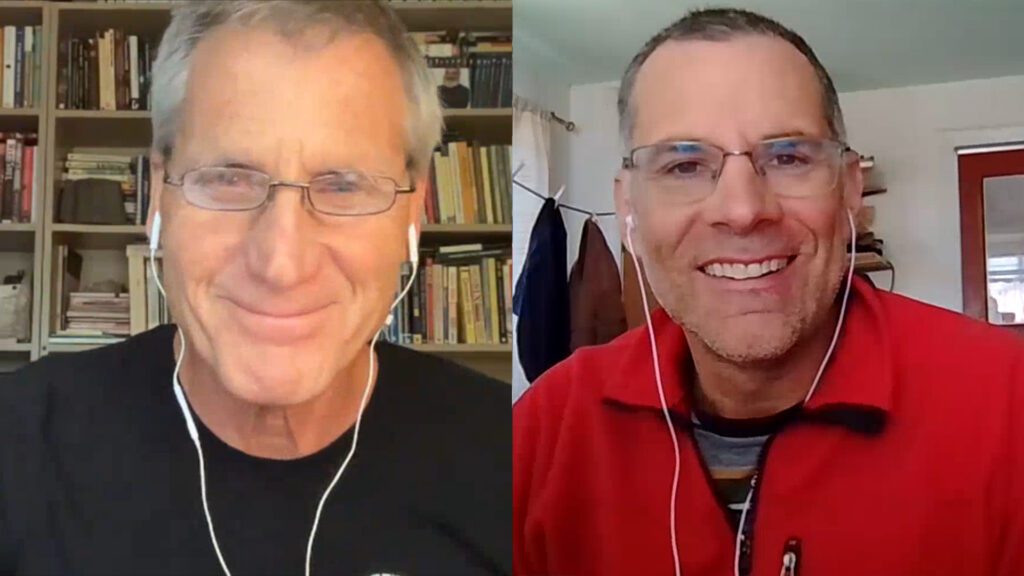
Many of you already know Mr. Farkas.
He’s been with the Front for years, teaching climbing classes like Mastering 5.10 and Intro to Climbing. If you haven’t taken his classes, you’ve likely seen his friendly face at the Front Desk or chatted with him in the Rumsy’s cafe. This past fall, David interviewed climbing legend and philosopher Arno Ilgner to chat about history, climbing progression, and ego. Arno is well known for his Rock Warrior’s Way program, in which he travels across the country teaching climbers about risk assessment, mental training, and falling without fear.
This interview has been edited for length and clarity.
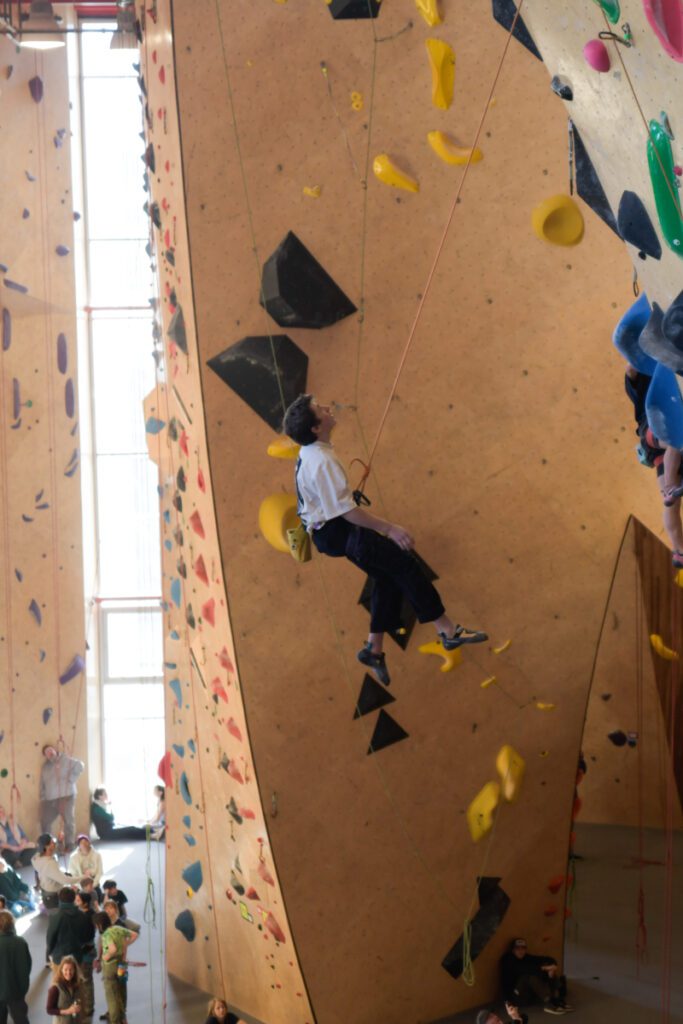
What inspired you to begin the Rock Warrior’s Way?
I live in the southeast United States, in Tennessee. I grew up here most of my life and had a lot of different jobs throughout my younger career. When I turned 40, I was frustrated and dissatisfied with my work. I was looking for something that I really enjoyed doing and what would inspire me or give more meaning in my life.
Climbing really resonated with me and felt like it gave me direction. I couldn’t really explain why I enjoyed it, but I don’t think we need to. I really was looking for something in climbing that I could do for a career, and I was known for being able to deal with fear.
So, I say, well…maybe I can investigate mental training. If I like studying it and then if I like teaching it, and if I can add value to climbers… As I investigated and as I taught, I learned from the students. So yeah, that was the genesis of it.
For readers who aren’t as familiar with climbing in the southeast or your background before Warrior’s Way, how long had you been climbing up to that point, and what was your main emphasis in the climbing you did?
Yeah, great point. I started in 1973, so about a decade before sport climbing. It was all traditional climbing and, particularly in the southeast, you have single pitched [terrain.] The sandstone that you have here in Tennessee, a lot of it is sport climbing, but there is some that has vertical cracks.
For multipitch climbing, there’s North Carolina and some in South Carolina. I really gravitated toward more multipitch stuff because I like getting up high and getting exposure. Think more of a longer commitment and challenge. So, that kind of attracted me to it.
In North Carolina, they had kind of a ground-up ethic and they really frowned upon rappel bolting and things like that. I guess I was in sort of the right place at the right time…I did kind of quite well in ground up [bolting] what you might say are “scarier routes” — that’s where I sort of developed my reputation.
Sure. Tendency to perform well on those routes- was that more of a given or an innate comfort with risk? Or was it something that you actively sought out? Was it the result of skills that you sought to improve at that time rather than later in your career?
Yeah, it was. It was something that came natural to me. It wasn’t until I started studying mental training that I saw that you really have to work at it. If it’s just coming naturally, then you’re just kind of eking out what’s easy.
To take it beyond that, we need to do some studying and some practice. For me specifically, what I’m able to deal with is physical risk. When I started digging into the mental training, what I wasn’t so skilled at was mental risk, like fear of failure – tying my self-worth to how I was performing, things like that. Once I realized that was something that I wasn’t skilled at, then I started intentionally practicing and I got better at it for sure.
What are the main things that your work aims to help climbers develop?
Yeah, that’s really an important question because it speaks to how one will approach mental training. I think everyone that does mental training approaches it a little bit differently. So this is how Warrior’s Way approaches it and foundationally is developing awareness.
On a simplistic level, if you’re not aware that you have a problem, you can’t solve it. That’s simple, but it goes much more beyond that… really developing awareness is about understanding this ego facade that we build around us.
We create an identity around [ourselves] – I’m just kind of a climber or I’m an afraid climber or I’m a courageous climber. I’m a sport climber, or I’m a trad climber.
I’m a good person, or I’m a bad person. We create, through our experiences climbing and beyond, this facade to kind of feel good about ourselves, so mental training needs to address that. We need to become aware of how we construct this ego identity and deconstructing unhealthful aspects of it. That’s like the foundational one that I think is really important.
We create an identity around [ourselves] – I’m just kind of a climber or I’m an afraid climber or I’m a courageous climber. I’m a sport climber, or I’m a trad climber.
How do you think climbers can get the most enjoyment out of our sport and make it a lifelong practice?
I like that you mention a lifelong practice. Whether you’re an advanced climber or beginning climber, or you’re just living your life…I think we have this tendency to think, if I just get to this point, then everything will be squared away, and life will be easier. It’s just not like that.
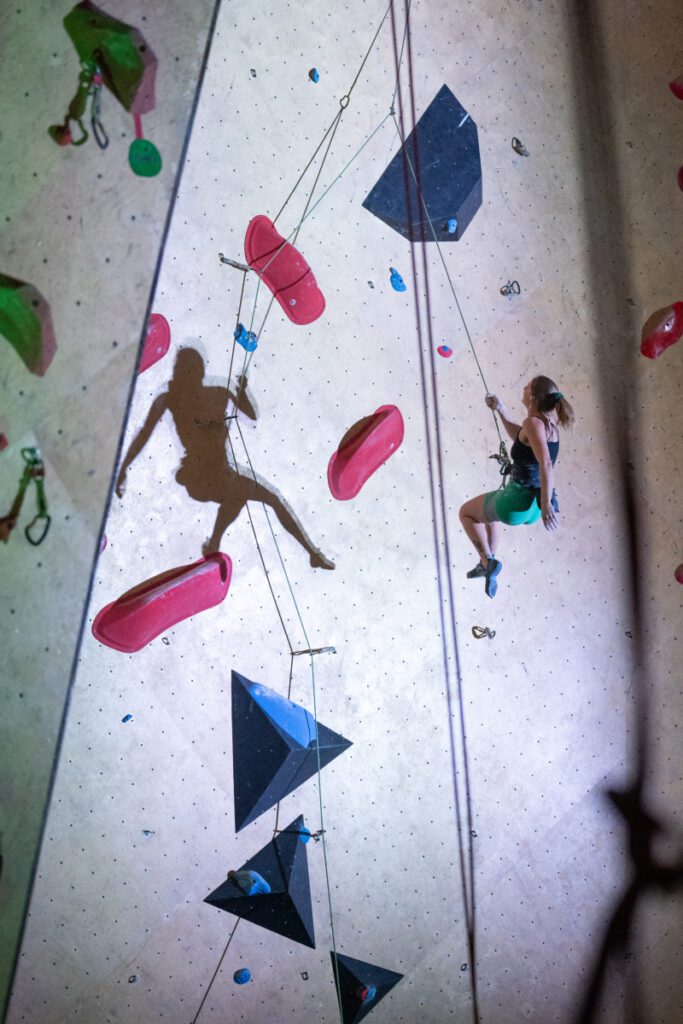
If we want to improve whatever we choose to integrate into our practice… say, “OK, I’m going to do this for the rest of my climbing career.” You know it’ll change through time, whether it’s falling practice, technique practice, strength training, or whatever it might be, but we need to shift how we think about it in order to improve the skill.
I need to find a way to continually practice it in some capacity because [change] is not static, right? My level of strength? That’s easy. If I just were to get physically strong and then I don’t [work out] anymore, then you know my physical strength will diminish over time. It needs some maintenance, some new training. That’s one thing that’s really important to shift for anyone.
What’s the biggest challenge that you see facing most of your students and how do you coach them through it?
The easy first one is falling…A lot of the students that sign up for a [Warrior’s Way] clinic are somewhere in the 5.9 to 5.12 range, and maybe more so 5.9 to 5.11, so they’re right in that range where they’re coming up against the need to practice falling and they resisted. So, learning how to fall properly is a really important need that they have and that we can provide.
Other challenges are more mental; our motivation, how we tie our identity to outcomes. So, I think climbers need to become more aware of their motivation. They need to have a tool to be able to separate identity from outcome and see it more objectively. This thinking is probably the most important mental training skill to develop in climbing and beyond, because if we think we are our thoughts, then we can’t get any distance from them. Then we’re sort of a slave to reacting to them instead of being able to notice them, and then choose to act on this one and not to act on that one. In other words, we become reactive.
Simple meditation can help you being able to focus, have an object of focus like your breath, and then to notice when attention shifts into thinking and then redirecting it to your object of focus. You start being able to notice thinking when it’s happening, instead of thinking you are your thoughts and being lost in it.
For more ways to get through climbing challenges, check out Arno’s books in the gear shop, Espresso Lessons and The Rock Warrior’s Way. If you’re more of a hands-on learner, we teach these principles in our Lead Climbing with Confidence class, offered at all locations.
All of our Ascent Series classes are no-cost for Front members until August 31st – check out our full class curriculum and sign up at SLC, Ogden, or South Main.

Arno Ilgner


