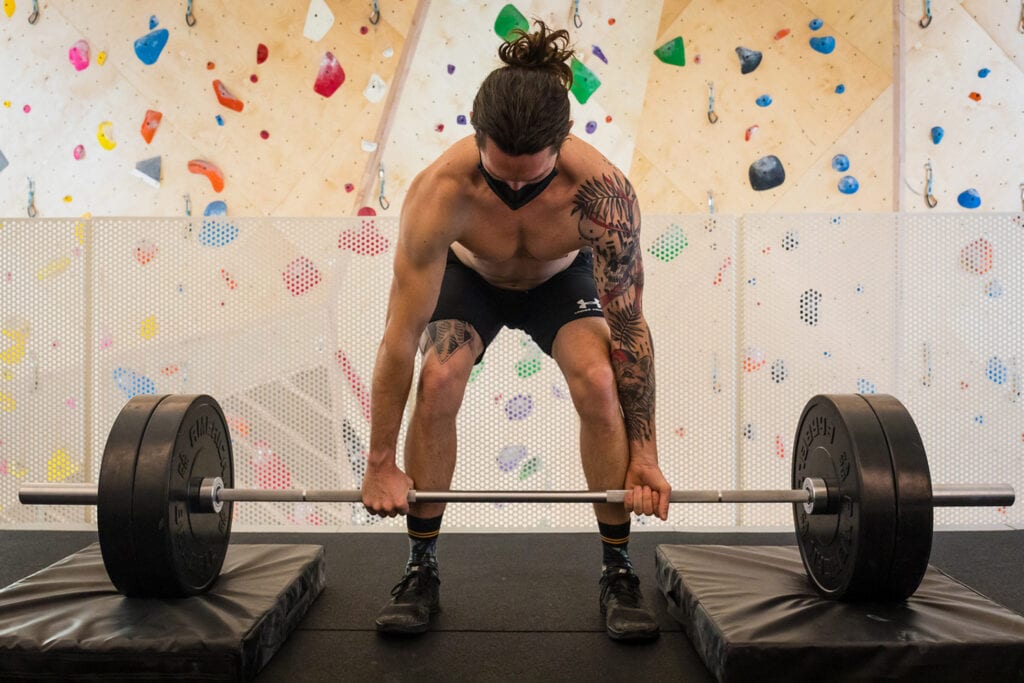
Feeling like you're plateauing in your sport?
Are you still not making any noticeable progress, sending your projects, or getting faster on the trails no matter how hard you try? Or maybe you are plagued by injuries and can’t figure out why? You’re not alone in your search for a progression breakthrough, but how can it be achieved?
Strength training plays a vital role for mountain athletes of ALL disciplines and ability levels. This may be something that you have heard and know you should do. Let’s dive a little deeper into the WHY behind strength training and the differences it can make in your athletic journey.
1 // Injury Prevention
We’ll begin by talking about injury prevention and how strength training can play a part in keeping you healthy.
Let’s think of strength training like routine maintenance on your car. If you never got your oil changed your car would start to break down over time. Similarly, If you avoid servicing ALL the muscles in your body, then it too may start to break down over time. Even just one weak muscle group can contribute to a large-scale breakdown. It is vital for our bodies to stay in balance, this means not only keeping the primary muscles of your sport strong but also dedicating exercises for the opposing muscle groups as well. Here’s a climbing example: As a lot of you are aware, climbing is primarily an upper-body pulling sport, meaning we are predominantly using our large upper back and shoulder muscles. Day after day of only climbing is going to overdevelop these muscles, causing a weakening and shortening of the opposing chest muscles, leading to imbalances (the dreaded climber hunchback). This is a prime example of not keeping the car serviced (push exercises) for maximal performance. Remember, strength training leads to balance which supports our full structures.
2 // Longevity
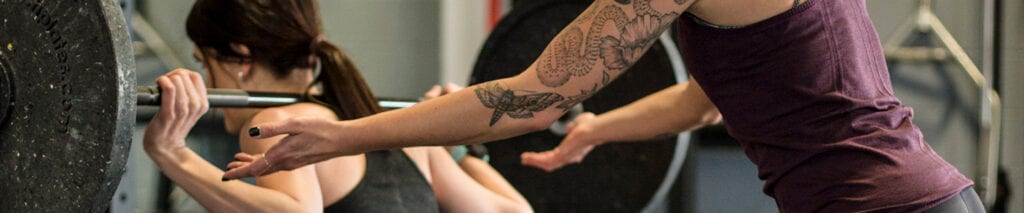
Next, let’s discuss longevity and how strength training can help you keep pushing harder and crushing your sport for longer, even as you age. As we talked about, strength training helps to keep the body balanced, and a balanced body will help prevent overuse injuries- keeping you at a high level in your sport for more years to come. As we age, our bodies naturally start to lose muscle mass. For many, this can often start as early as our 30s! Those older folks out there know how true this is, making strength training more relevant. As we age, we must work harder to maintain strength to avoid injury and stay at the top of our sport! Strength training is not only vital for sport, but maintaining a healthy, balanced, and functional life.
3 // Efficiency, economy, and power:
Lastly, let’s go over how strength training can improve efficiency, economy, and power in your mountain sports of choice. I am going to start by defining these terms in relation to sport to understand their differences. Efficiency is the ability to avoid wasting energy, ie. not working harder than you have to in order to reach the desired goal. Economy is the careful management of valuable resources. In relation to climbing, running, biking, etc. this would mean how much oxygen is consumed for that particular movement/stressor (there are multiple factors that can influence this, including biomechanics). Power is the ability to move weight with speed i.e.: crux of a climb, dynamic boulder move, sprinting, hill climb, etc.
Many athletes wonder, “can’t I just do more of my sport to get better?” Certainly, this is a component of improvement, especially earlier on in an athlete’s career, but what can be done about that dreaded plateau? You guessed it; this is where the strength training comes back in. Having stronger muscles will allow you to waste less energy getting up the mountain- increasing efficiency. Many studies have shown strength training can aid in increasing your VO2max (max oxygen consumption during exercise), therefore, improving economy. Another factor in improving economy is biomechanics (basically the physics of sports), which proper strength training can greatly affect. Lastly is power, I believe the easiest to understand. If your muscles are stronger (and trained in proper rep ranges) they will be faster and more dynamic! Whewww, that was a lot of technical jargon. The summary of this simply being: strength training will make you a better athlete.
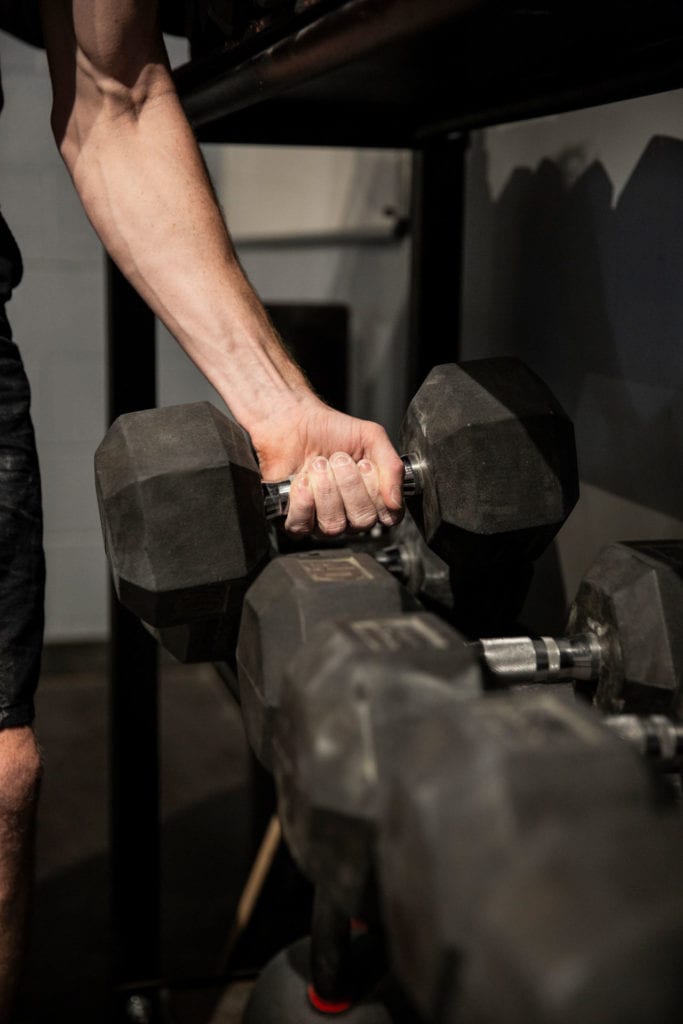
In short, strength training is important no matter who you are. Hopefully, you now have a better idea of exactly why and how it relates to mountain sports. It is key to remember that a balanced body moves best. As an athlete, you need to work hard both on and off the mountain not only to have a strong season but for longevity!

By Erin Storck
Personal Trainer and Group Fitness instructor
Erin Storck has been teaching fitness classes at The Front for over a year and a half. She has five years of experience in personal training, two of which are with The Front. Erin is ACSM Certified Exercise Physiologist, Certified Schwinn Spin Instructor and TRX Instructor. She teaches TRX Training, Mountain Fitness, and Recovery. In her classes, you can expect high energy and proper form! She is passionate about snowboarding, backcountry skiing, mountain running, climbing, and strength training!
Sign up for personal training and group fitness classes with Erin!


