fbpx

Training Pyramids and Why They Rock

Do you feel a nip in the air? It may be 90 degrees this week, but we know that autumn is on the way.

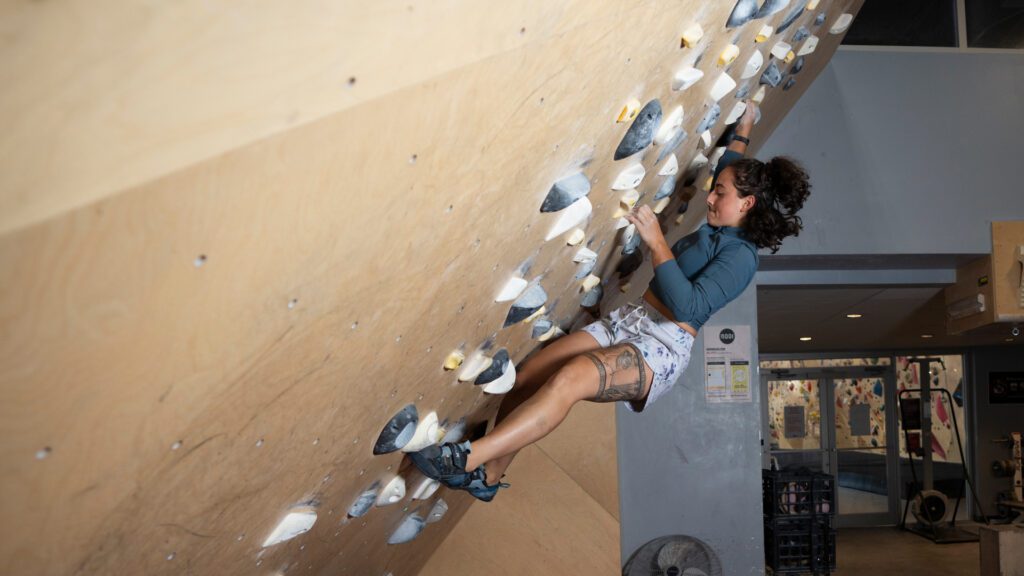
As the leaves start to fall, we start to kick our training into high gear. This time of year, we’re interested in working to slowly scale our climbing up, working at harder grades, to ultimately crush our projects (Big Joe—I’m looking at you!) There are tons of tools at your disposal to train, but this season we’re recommending training pyramids.

What are they?

Much more than a game, training pyramids have existed for decades to give climbers at all levels a climbing goal and structured pathway to get there. Training pyramids consist of a base, at a grade the climber can send consistently. The next levels scale up in difficulty, until the climber reaches the very tippy top of the pyramid: their project grade. There is generally a 2:1 ratio between climbing levels in a training pyramid. For example, if my goal is to project a Pink DOT boulder, the base of my pyramid would be 8 Yellow DOTs, followed by 4 Blue DOTs, then 2 Green DOTs, and a final project goal of 1 Pink DOT climb. In this scenario, Yellow DOTs should be something I can climb easily and consistently, while the Green DOTs should produce a little sweat.

How do I use them?

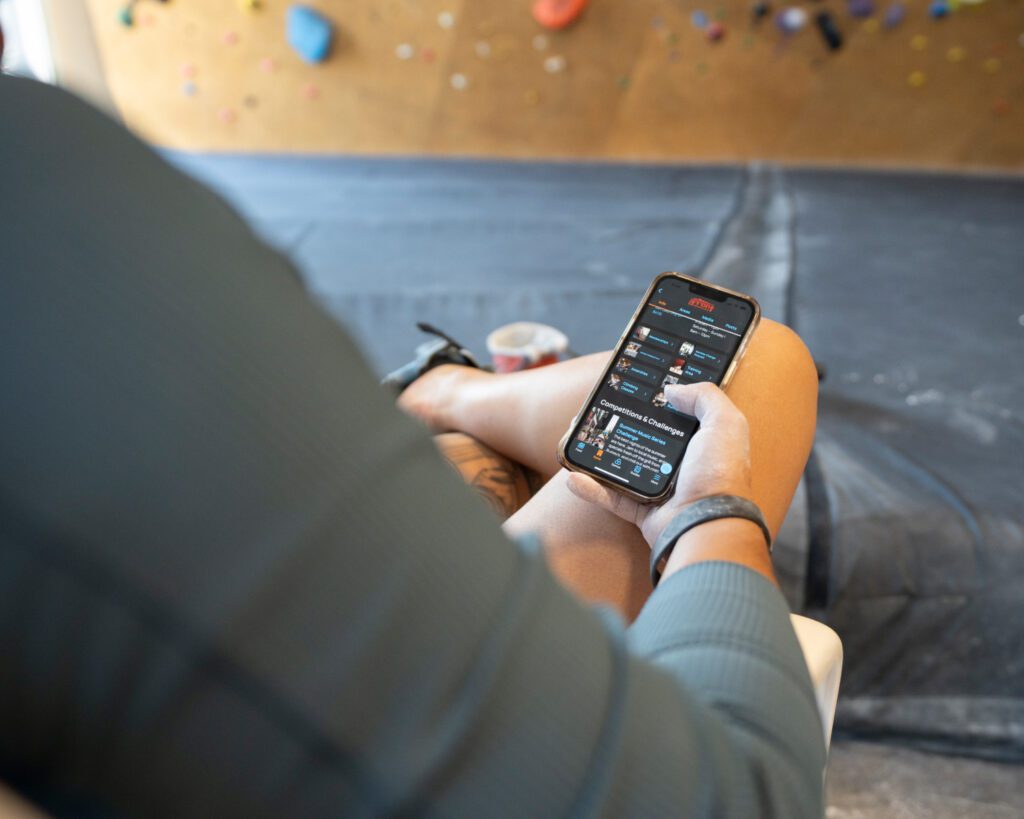
Whether you’ve designed your own pyramid or you’re using one from a coach or in Pebble, pyramids function in effectively the same way: work to climb every step of your pyramid, from the base level to the top, in ascending order (who wants to start with the hard stuff, anyway?) Climbers can work to complete a pyramid over one session or a season; there aren’t any rules. We would suggest working on bigger, boulder pyramids for longer periods of time, like scaling your ropes practice from 5.9 to 5.11, and keeping smaller goals for your sessions. Beyond the numerical win of climbing progressively harder routes, pyramids can help structure a session to encourage warming up, build climbing endurance, and improve technique through volume.

Any extra considerations?

Pyramids are by no means the only way to improve your climbing skills. In addition to this tool, we encourage you to explore hang boarding workouts, board climbing, and even private coaching to up your game. Our new Salt Lake City expansion will be home to our training boards soon, and we always have oodles of crimps at your disposal at all our locations.

While you’re training, remember that growth is not linear. It may take a few pyramids (or 4x4s, repeaters, and lifts!) to send your project, but we’re here to support you every step of the way.

Katie McGowan

Communications Manager