
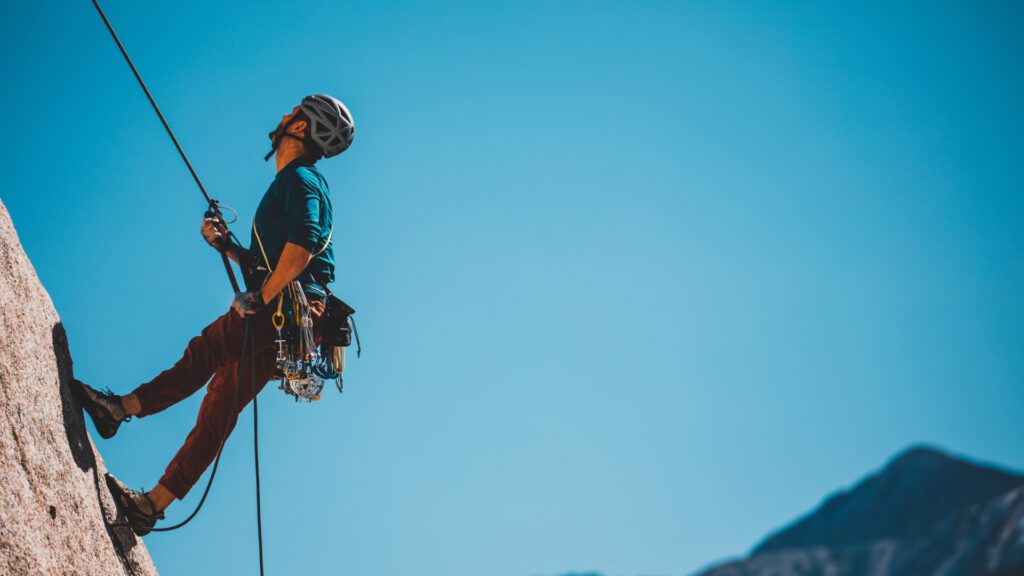
Altitude stresses our bodies, impacting how we think and move when unprepared for the demands of these extreme environments.
In part one, we covered the characteristics of these settings and their effects on our body’s systems. Although there is no way to prevent these changes, there are steps we can take to make the adaptation process smoother, preventing illness and improving our sports performance along the way.
Impact on Sports Performance
Upon arrival, our hearts and lungs work harder than usual. Our blood pressure, breathing, and heart rate are elevated in attempts to move oxygen to our deprived muscles and organs.1-2 These immediate changes negatively impact an athlete’s exercise capacity, meaning they can’t achieve or maintain the same high-intensity compared to low land. After bouts of elevated exertion, it takes longer to recover steady-state breathing, too.3 Athletes experience signs of fatigue earlier and perceive their usual activity as more challenging; many folks experience difficulty with skill-based tasks like clipping a bolt while climbing or kick-turning up steep slopes on skis. As our body redirects resources, our brain receives less oxygen than usual, which reduces coordination, reaction time, and decision-making.4-5 We can set ourselves up for success leading up to high-altitude travel by planning and prioritizing time to adapt, proper hydration and fueling, and adequate rest to mitigate the chances of severe decreases in athletic performance and illness.
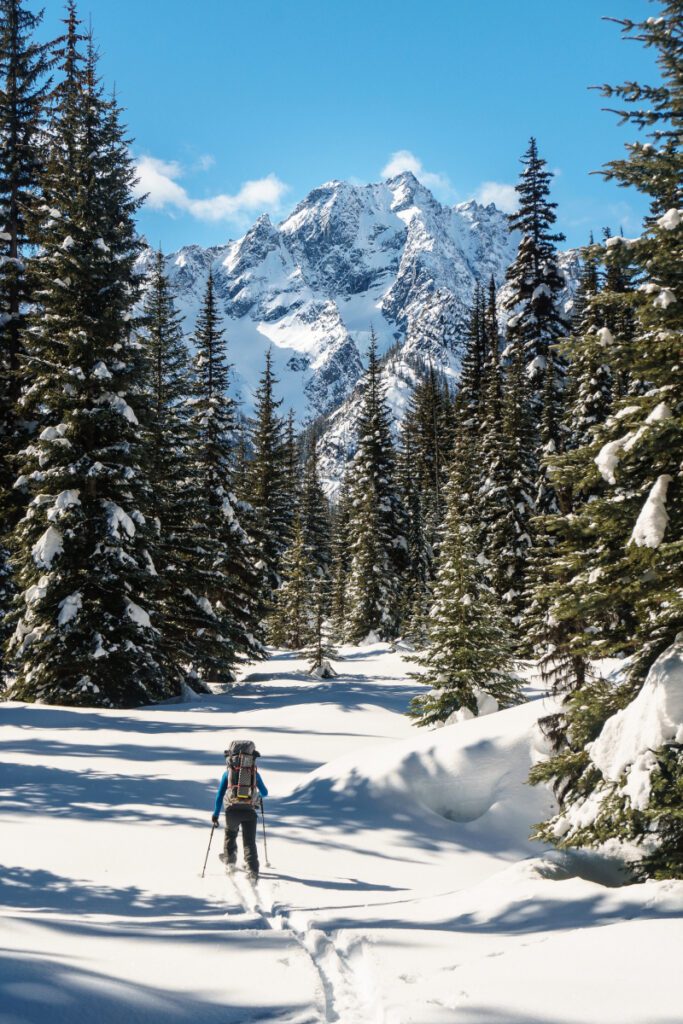
Altitude Training and Acclimation
Altitude exposure in true environments (mountains) or simulated settings (low-pressure chambers and tents) can provide athletes with a tactical advantage. The main adaptation that benefits performance, specifically endurance, is related to red blood cells (RBC), which carry oxygen within the body. Exposure to low-air pressure triggers the production of more RBCs and enhances oxygen transportation.6
There are several popularized approaches to gaining altitude-induced advantages, yet only a few are supported by research. Unfortunately, an individual needs to expose themselves to decreased air pressure to develop these advantages; elevation training masks don’t cut it as these devices don’t change air pressure and do not improve lung functioning or stimulate RBC increases.7
For an upper hand before a low-land race or competition, athletes who live at higher altitudes (live high, train low) are accustomed to the oxygen demands of that setting. Suppose an athlete travels to lower elevations and competes. In that case, their endurance performance is enhanced, while high-intensity activity feels less challenging. Runners who live at higher altitudes and race at lower elevations can expect improved time trials and greater movement efficiency when racing or training at lower elevations.8-9 After several days to weeks, the body will adjust to the lower altitude, so reducing the time between exposure and the subsequent race or training sessions at lower elevations is essential.
Some athletes visit altitude training camps or facilities for exposure or periodically train or sleep in altitude chambers or tents. Regardless of the available resources, research suggests that exposure to environments at or mimicking about 6,500-8,200 feet (2,000-2,500 meters) provides an adequate dose of low-air pressure without negatively impacting training quality. The exact altitude depends on different factors, such as where an athlete lives.9-10
Preparing for objectives in extremely high altitudes (like mountaineering) requires athletes to slowly ascend, even sleeping at progressively higher locations, to begin the adaptation process and prevent illnesses. Although guidelines and durations vary based on where the athlete lives and the end-altitude goal, the rule of thumb is that once above 6,500 feet (2,500 meters), altitude should be increased at a rate of approximately 2,000-4,000 feet (600-1,200 meters) per 24 hours.11-12 If a team member experiences symptoms of altitude illness (e.g., headache, nausea), ascent shouldn’t occur until symptoms have resolved. Certain sporting events require athletes to rapidly ascent to higher altitudes without proper acclimatization, putting them at higher risk for altitude illness and detriments to sports performance.10-12
Fuel and Hydration
Working harder is tied to more significant sweat rates and water loss through breathing; increased fluid loss also exacerbates the risk of dehydration and cold-exposure illnesses like frostbite.13 Athletes must account for this by drinking extra water supplemented with electrolytes, which will also prevent decreases in sports performance.
Regardless of elevation, carbohydrates are the body’s primary energy source, especially during prolonged activity. Fueling before, during, and after activity is essential to preserve fuel stores within our muscles. Carb intake before exercise also helps maintain oxygen saturation during altitude exposure.13 These environments make high-carb intake less appealing (remember your appetite is suppressed!), so athletes should consume as much as tolerated and focus on small amounts frequently throughout the day, as it’s easy to fall behind. 12-14 Protein intake should also be considered to maintain muscle mass during travel and sports; the general recommendation is at least 1.3 grams per kg of body weight per day as long as carb intake isn’t impaired. 13, 15 It is essential to practice fueling during training to increase gut tolerance and learn what works best for your body.13 Preparing for significant objectives requires a team. For recommendations specific to you, consult a registered sports dietitian.
Takeaways
High-altitude environments stimulate changes within our body that can impact how we live, rest, and play. Although intimidating, athletes must understand its impact for adequate preparation and planning so we can enjoy ourselves, feel good, and crush our goals. Research in these areas has expanded our understanding of our bodies in these settings. When in doubt, consult a sports or medical professional.
With all of this in mind, below are key takeaways to prepare for your next high-altitude journey:
- Low air pressure impacts the quality of sleep. Give yourself adequate time to rest and adjust to higher altitudes as you ascend to higher locations.
- Hydrate for at least three days before your trip, and drink to keep up with your sweat rate during activities; consider adding electrolytes, too.
- Create a plan and practice consuming more carbohydrates for energy balance and protein to maintain lean mass.
- Communicate with your travel partners about the signs and symptoms of high-altitude illness and plan for an event.
References:
- McClelland, G. B., & Scott, G. R. (2019). Evolved mechanisms of aerobic performance and hypoxia resistance in high-altitude natives. Annual review of physiology, 81, 561-583.
- Richardson, A., Watt, P., & Maxwell, N. (2009). Hydration and the physiological responses to acute normobaric hypoxia. Wilderness & environmental medicine, 20(3), 212-220.
- Richalet, J. P., & Hermand, E. (2023). Cardiovascular response at maximal exercise at high altitude. Journal of applied physiology (Bethesda, Md. : 1985), 134(1), 147.
- Virués-Ortega, J., Buela-Casal, G., Garrido, E., & Alcázar, B. (2004). Neuropsychological functioning associated with high-altitude exposure. Neuropsychology review, 14, 197-224.
- Bliemsrieder, K., Weiss, E. M., Fischer, R., Brugger, H., Sperner-Unterweger, B., & Hüfner, K. (2022). Cognition and Neuropsychological Changes at Altitude—A Systematic Review of Literature. Brain Sciences, 12(12), 1736.
- Paralikar, S. J., & Paralikar, J. H. (2010). High-altitude medicine. Indian journal of occupational and environmental medicine, 14(1), 6–12.
- Porcari, J. P., Probst, L., Forrester, K., Doberstein, S., Foster, C., Cress, M. L., & Schmidt, K. (2016). Effect of wearing the elevation training mask on aerobic capacity, lung function, and hematological variables. Journal of sports science & medicine, 15(2), 379.
- Wilbur R. L. (2007). Live high + train low: thinking in terms of an optimal hypoxic dose. International journal of sports physiology and performance, 2(3), 223–238.
- Saunders, P. U., Garvican-Lewis, L. A., Chapman, R. F., & Périard, J. D. (2019). Special Environments: Altitude and Heat. International Journal of Sport Nutrition and Exercise Metabolism, 29(2), 210-219.
- d´ Almeida, A. G. (2023). Exercise at High-Altitude. In High Altitude Medicine: A Case-Based Approach (pp. 183-198). Cham: Springer International Publishing.
- Koehle, M. S., Cheng, I., & Sporer, B. (2014). Canadian Academy of Sport and Exercise Medicine position statement: athletes at high altitude. Clinical Journal of Sport Medicine, 24(2), 120-127.
- Khodaee, M., Grothe, H. L., Seyfert, J. H., & VanBaak, K. (2016). Athletes at High Altitude. Sports health, 8(2), 126–132.
- Viscor, G., Corominas, J., & Carceller, A. (2023). Nutrition and Hydration for High-Altitude Alpinism: A Narrative Review. International Journal of Environmental Research and Public Health, 20(4), 3186.
- Matu, J., O’Hara, J., Hill, N., Clarke, S., Boos, C., Newman, C., … & Deighton, K. (2017). Changes in appetite, energy intake, body composition, and circulating ghrelin constituents during an incremental trekking ascent to high altitude. European journal of applied physiology, 117(9), 1917-1928.
- Fujita, S., Dreyer, H. C., Drummond, M. J., Glynn, E. L., Cadenas, J. G., Yoshizawa, F., … & Rasmussen, B. B. (2007). Nutrient signaling in the regulation of human muscle protein synthesis. The Journal of physiology, 582(2), 813-823.

By Beverly Albert, MSc, CSCS
Certified Strength and Conditioning Coach and Educator
Beverly is a Ph.D. student, sports scientist intern, and ultra-endurance athlete. Her experiences pushing her possible in the mountains drew her to dedicate her life to studying extreme environments and teaching athletes practical skills to do the same.


