
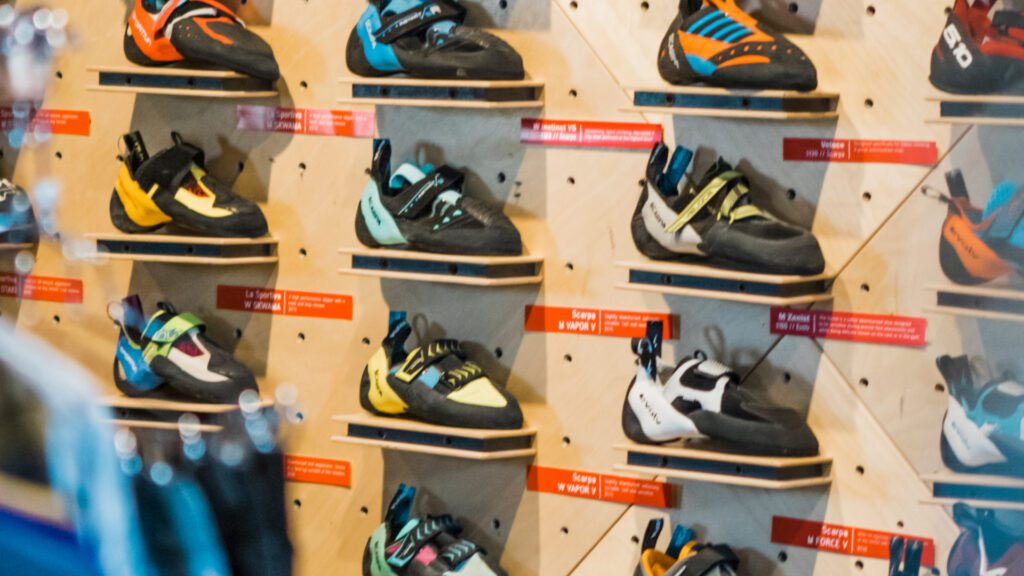
Whether you’re scaling multipitch mountains or throwing some powerful moves on the indoor bouldering wall, climbing shoes are an essential piece of gear for any climber. The right shoe can offer support, stability and endurance for whatever you want to climb. With so many options available and even the best shoes only lasting a few years with consistent use, it can be overwhelming to find your next perfect pair. We get it, so we’ve compiled a list of important factors to take into consideration when searching for your new pair! We’ll cover the basics of a climbing shoe, what to look for to enhance your specific type of climbing and some overall helpful tips for choosing your next shoe.
The Front has the biggest shoe selection in Utah across its three Gear Shops. Looking for a specific pair? Give us a call and we’ll help find just what you’re looking for!
This month, Front members get an extra 20% back on their climbing shoes. It’s the perfect time to slip into a new pair! Let’s say you spend $200 on shoes – you would get $80 back in credit to use on something else in our shop. That could cover the cost of a whole harness!
Glossary
This article uses a fair amount of jargon that might be unfamiliar to someone getting their first pair of shoes! Refer back here anytime you see an underlined vocab word to learn its specific definition. These definitions are in order of appearance.
Edge stability: A shoe shaping function that aims to provide extra hold or comfort on unstable or sloped holds
Smearing: pressing your shoes directly against a wall or volume, as opposed to putting pressure on a hold.
Toe hook: applying pressure on a hold with the top of the toes or foot, as opposed to standing on a hold.
Trad: “traditional” climbing, utilizing extra pieces of gear that the climber places themselves to provide points of protection on an outdoor climbing route. There are no permanent pieces of protection (like a bolt) on a pure trad route.
Multi-pitch: a type of climbing with multiple pitches; a pitch is one length of climbing where a leader will ascend and create an anchor. The original belayer then climbs up after. Linking together multiple pitches on one face creates a multi-pitch climb.
Edging: the ability of a climber to stand on the edge of a climbing hold – typically applies to very small or sheer holds or features on a wall.
Overhang/Overhung: any wall that is at an angle less than 90 degrees from the ground – if you’re leaning back, that’s overhung.
Down turn: A shoe shape with a toe that drops lower than the bottom of the heel cup. The arch will appear exaggerated like a crescent.
Heel hook: Applying pressure on a hold with the back of the heel, as opposed to standing on a hold.
Toe in (to a hold): applying pressure with the front of the toes and creating enough friction to maintain contact or stand on the hold
Broken in: shoes that have been worn enough to become molded to the unique shape of the foot of its climber; a “sweet spot” of performance and comfort. Usually takes several months of weekly use to achieve.
Upper: The top fabric of the climbing shoe, typically made from leather or a synthetic fabric.
Rubber
The rubber of your climbing shoe is the part intended to come in contact with rock or a gym wall. Your first choice – soft or stiff rubber? Your choice may be determined by your indoor or outdoor preferences or goals. The type of rubber needed can also vary with the type of rock you’re climbing, depending on how hard or soft the rock is. That amazing sandstone in southern Utah is a known soft shoe-eater.
Softer rubber
Softer rubber offers better sensitivity, which allows you to feel what is underfoot better, but it can be a bit less durable. It also has less edge stability, which makes it harder to stand on smaller holds, but it has great friction for slab climbing, smearing on large volumes and can even help with toe hooks, which make these shoes a great choice for indoor bouldering or sport climbing. The softer rubber will also generally wear out less quickly on indoor terrain.
Some softer shoe examples include the Evolv Shaman, La Sportiva Theory, the Scarpa Veloce and the Scarpa Instinct VSR.
Stiff rubber
Stiff rubber on the other hand is great for stability and edging on smaller holds. They give you an edge (pun intended) on trad and multi-pitch routes as the extra stability can help your feet and legs from getting tired. They offer more protection to your toes while standing on sharper edges at the cost of less sensitivity for feeling what’s under foot.
Some stiffer options include La Sportive Katana Lace, Scarpa Instict VS, and the TC Pros.
While most people generally agree that specific rubber is best for specific types of climbing, others just have their own preference! Personally, I love soft rubber on most climbs, and while my legs do wear out more quickly on longer climbs, I climb way better with the higher sensitivity that softer rubber gives me both indoor and outdoor!
Vibram
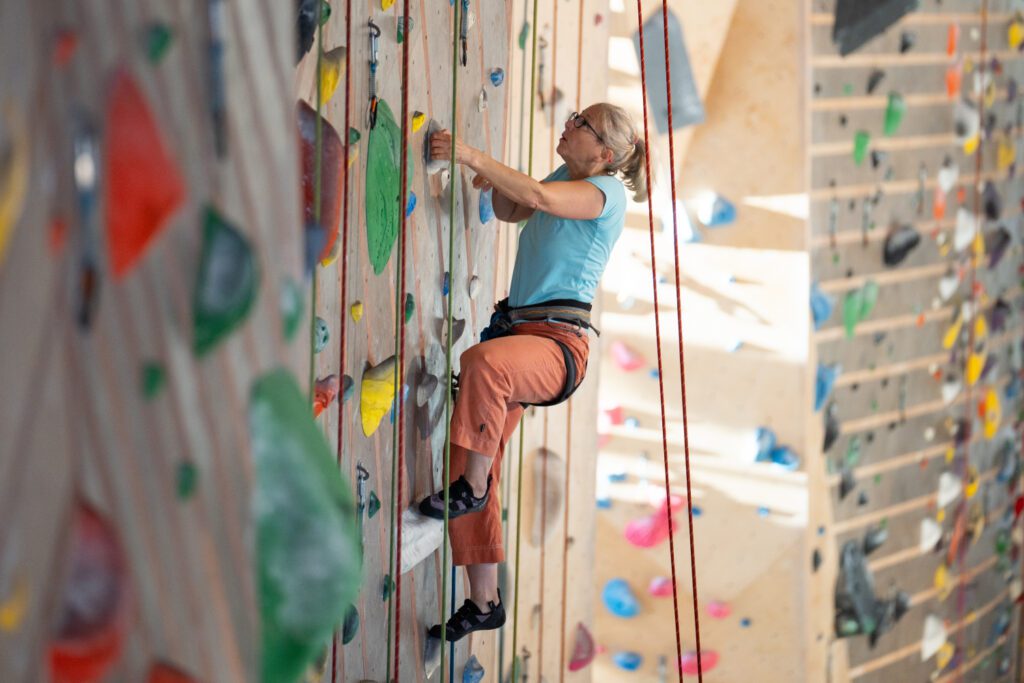
While there are a few different brands of rubber dominating the industry right now, Vibram rubber is arguably the most common of all. Vibram’s main rubber options on climbing shoes are XS Grip, XS Grip 2, and Edge. Many top brands, such as La Sportiva, Scarpa, and even sole-repairing companies use Vibram rubber.
Let’s talk about some of these options!

Vibram XS Grip
The original Vibram rubber has been used by over 10 manufacturers and by pros, including Alex Megos and Daniel Woods. It offers a good middle between grip, edge and durability on large surfaces.
Vibram XS Grip 2
An improvement on the XS Grip that offers a stickier, slightly softer feel while remaining firm. It’s good for moderate edging and sloping holds and works best on overhanging routes thanks to its maximum grip. It also maintains consistent performance in all temperatures.
Vibram XS Edge
This rubber provides maximum edge support that offers great stability on longer routes. They’re firmer than their counterparts and offer improved resistance to distortion so they keep their shape throughout longer climbs.
Flat vs. Aggressive
While some people will say that you need a more aggressive shoe as you progress your climbing level, that’s not necessarily true. Just like the different types of rubber, different shoe shapes can be better for different things. When trying on climbing shoes, we want them to be snug and possibly a bit uncomfy, but never painful. Our toes should reach the end of the shoe and potentially be somewhat scrunched but not curled over themselves.
Flat shoes
Flat shoes have minimal downturn and a relatively straight sole, which makes them a more comfortable option compared to a more aggressive shoe. While the primary aspect of a flat shoe is comfort, they also offer a few features that make them great for specific types of climbing. Flat shoes generally offer more stability which can help foot placement, and they are easier to keep on for longer periods of time, making them a good option for full days of crag climbing or even just warming up. While they are comfortable and durable, flat shoes do struggle to offer advantage on more technical climbs and skills such as heel hooking, toe drive, or climbing steeper, overhung terrain.
Generally, flat shoes are geared more toward beginners. This is because they are more comfortable, but they also give your foot time to get used to tighter shoes. In my experience with shoes, and from my own experience as a climber, when newer climbers get an aggressive shoe as their first shoe, they often end up getting a bigger size than needed which can be difficult to climb in. This will inhibit their skill learning potential as big shoes make it hard to toe into smaller holds, and it can also just be frustrating to spend hundreds on a shoe that ends up being too big. Buying a flatter climbing shoe as a first shoe can help mitigate this and sizing down isn’t as big of a change from your normal foot position.
Some flat shoes include the Scarpa Force, La Sportiva Tarantula and the La Sportiva TC Pro. In fact, if you’ve ever used our rental shoes at The Front, then you have used the Tarantulas, which have a flat sole, hard rubber and a comfortable fit.
Aggressive shoes
Aggressive shoes, on the other hand, offer better performance on tiny edges, pockets, and other skillful movements. They’re great for overhung terrain due to the downturned shape, which makes the climber point their toes into one main point on the shoe. They fit more snugly than a flat shoe. They can excel on more technical climbs and smaller holds, but the tradeoff is that they can be difficult to wear on longer climbs due to the inherent shape of aggressive shoes. While flat shoes generally come with a harder rubber, aggressive shoes can have soft or stiff rubber.
Some aggressive shoes include the La Sportiva Skwama, the Evolve Shaman, or the Scarpa Vapor V for a moderately aggressive shoe.
Bringing It All Together
So, how do you know what’s best for you?
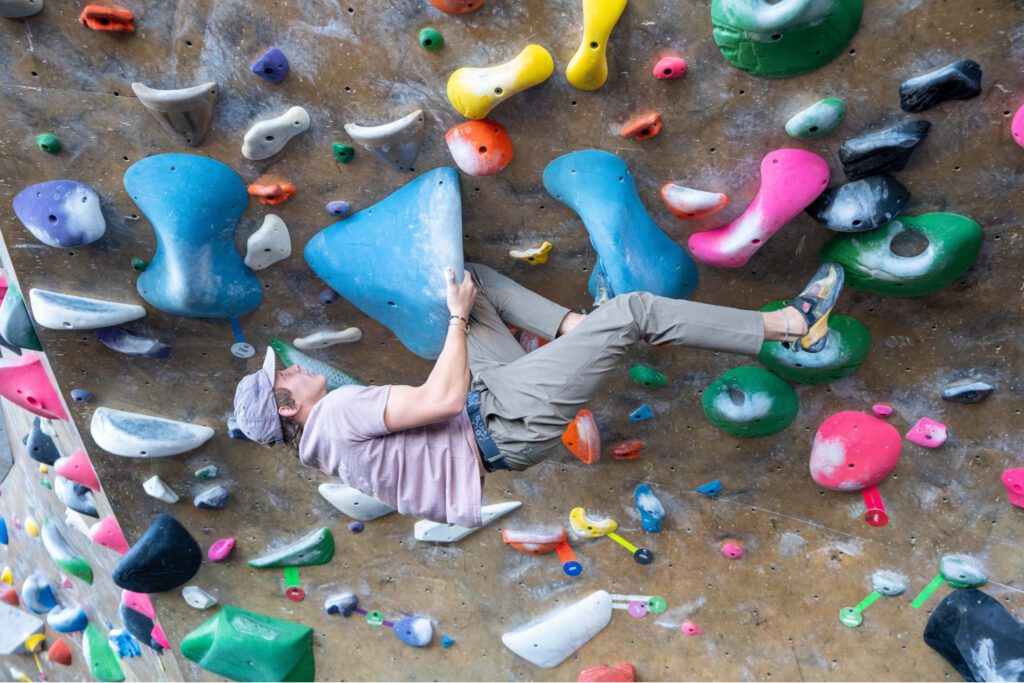
I personally like a moderately aggressive, softer fit, as mentioned earlier, but it’s best to try on some different types of shoes to see for yourself because it really comes down to fit and function. Some people also prefer to have multiple shoes for different types of climbing. At The Front, we offer tons of different types of shoes to try on, and you can even try them out on the wall.
We offer multiple brands of climbing shoes at The Front, including La Sportiva, Scarpa, Butora and Evolv. Depending on your foot shape, different brands may suit you better. For example, La Sportiva generally has a narrower and smaller fit than Scarpa. So, if you have a wider food (like me) trying out some Scarpa shoes may be the way to go! Alternatively, other brands like Evolve offer shoes that can cater more toward a narrow heel and wide forefoot. The sizing also varies differently, you may wear a few sizes smaller or larger in one brand than the other. All this to say, it’s best to go try on some shoes for yourself!
For a more in-depth breakdown on brands, shoe gendering, and foot volume, check out our blog The Thick and Thin of Climbing Shoes.
So, I’ve found the right shoe. Now what?
Now is maintenance. Once we use our shoes, they will start to wear down. There are some things you can do to help slow the wear process, but eventually you will also have to choose whether to replace or re-sole them.
Firstly, let’s take some precautions to slow the wear process. Although it’s easy to keep your shoes in a climbing bag in the car, this can be detrimental to shoe health, especially in severe weather. The heat of summer and the cold of winter can more quickly deteriorate and potentially deform your shoes. When you’re done climbing, it’s best practice to take your shoes inside and let them air out outside of your climbing bag. Some people even clip their shoes on the outside of the pack with a carabiner.
It’s also good to wipe dirt and debris off your shoes after climbing or walking around outside, and limiting the time you walk in your shoes. Generally, I will walk to my climb, indoor or outdoor, barefoot or in normal shoes, then put my climbing shoes on right before I hop on the wall. This will ensure that you are getting maximum use out of them instead of wearing them down by walking in them, which can contribute to the flattening of more aggressive shoes.
End of lifespan care
After a while, your shoes will eventually start to wear out too much to continue using. You may notice they don’t hold shape like they used to, or that the edge of your sole is worn through (usually this happens on the side of the big toe first). This is normal, and is where you make a decision of resoling versus buying. Some people like to get their shoes resoled as they are already broken in, and resoling generally doesn’t cost as much. However, it can cause the shoe shape or size to change slightly, and they may not last as long as a new pair of shoes. Resoling shoes also does not fix problems like holes in the upper or general loss of shape. Resoling is more environmentally sound as it uses fewer resources overall by allowing more use out of one shoe.
Buying new shoes does cost more, but offers more variety if you want to change up shoe types or brands, and allows for a fresh, durable option.
While this guide offers information and tips to help you find a perfect fit, the choice comes down to what you prefer. Nothing beats going to try out shoes for yourself, especially with the help of our knowledgeable staff. And as you continue to climb, you will narrow down your preferences and figure out which shoes work best for you!